Stone and Brick Fireplace Limewashing in Leander

Typical cost in Leander

  • One brick or stone surround$500 – $2,000+

Leander Limewash Painting limewashes fireplaces in Leander homes, from cream limestone and cast stone to brick and plaster surrounds. Limewash lightens a stone that has turned yellow next to new white walls, or a brick that reads too orange, and keeps the edges, joints and texture that paint would flatten.

A fireplace is a small area with a lot of detail, from soot cleaning to protecting a beam mantel and hearth. Fireplace work covers Leander and Liberty Hill, Santa Rita Ranch, Jonestown, Brushy Creek, Georgetown and Round Rock.

Request a free quote

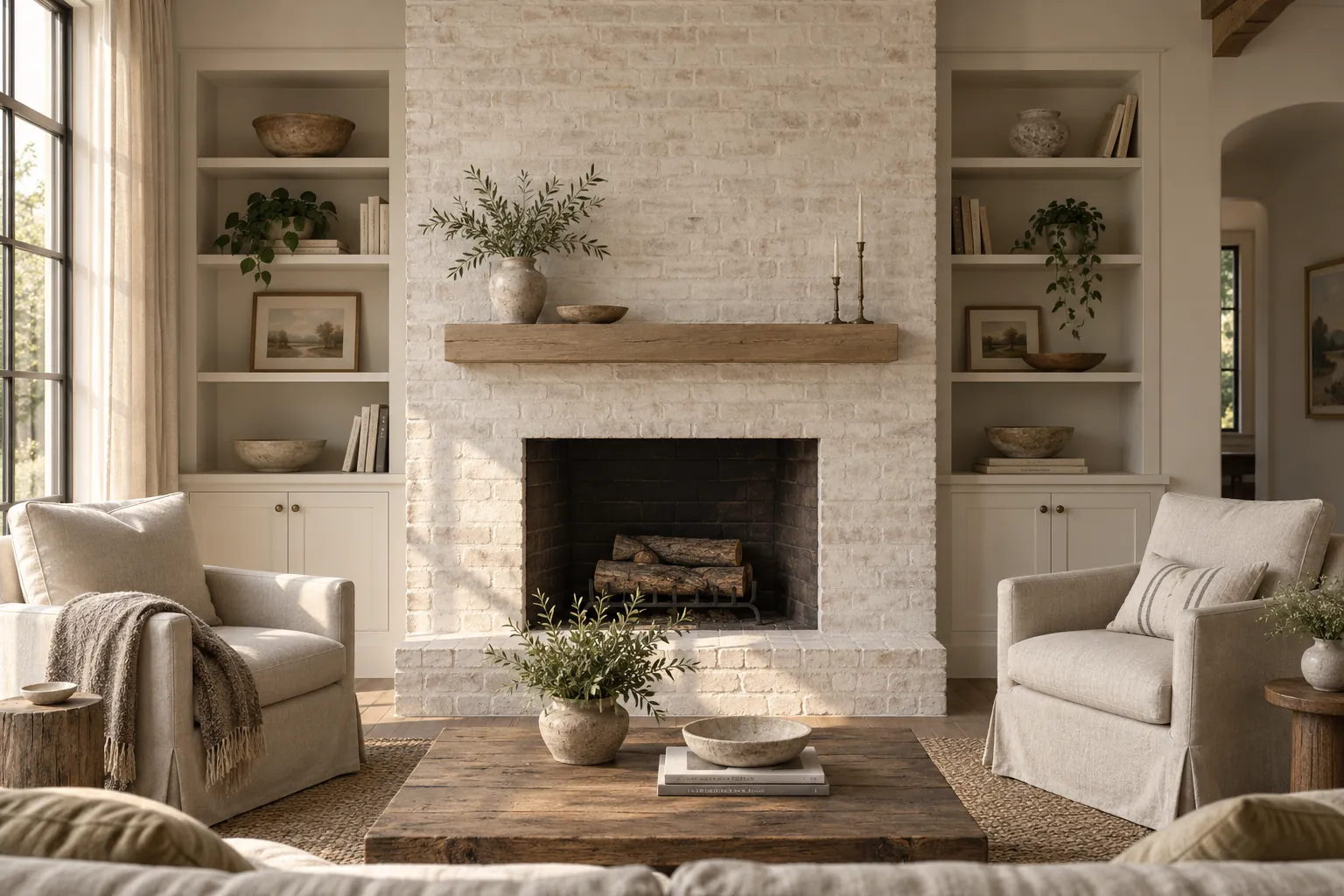
Brick fireplace limewashed chalky warm white between built-in shelves

Fireplace limewash options

Limestone fireplaces

Raw limestone absorbs limewash readily, so a thinned first coat and one fuller coat are often enough to shift cream or yellow stone toward warm white. The stone keeps its chisel marks and shadows. If water beads on the stone instead of soaking in, it is sealed or too dense and needs a different plan.
Cast stone and stone veneer

Many fireplaces that look like quarried stone are cast stone, which is concrete made to look like stone. Some absorb well and some are dense or factory-sealed. A water test on several pieces tells us which, before any color is chosen.

Floor-to-ceiling fireplaces

A fireplace that runs up a two-story great room needs a scaffold tower and two painters, because each coat must be finished top to bottom before any part dries. That access, more than the square footage, sets the price of a tall fireplace.

Brick fireplaces

Bare brick takes limewash well. One or two coats soften orange or red brick, and the mortar joints stay readable. Painted brick depends on the product and may need a primer or stripping first.

Plaster and drywall surrounds

A smooth drywall or plaster surround can be limewashed over the primer system its product names, for a plain, plaster-like look. It works best when the finish carries up the whole chimney breast.

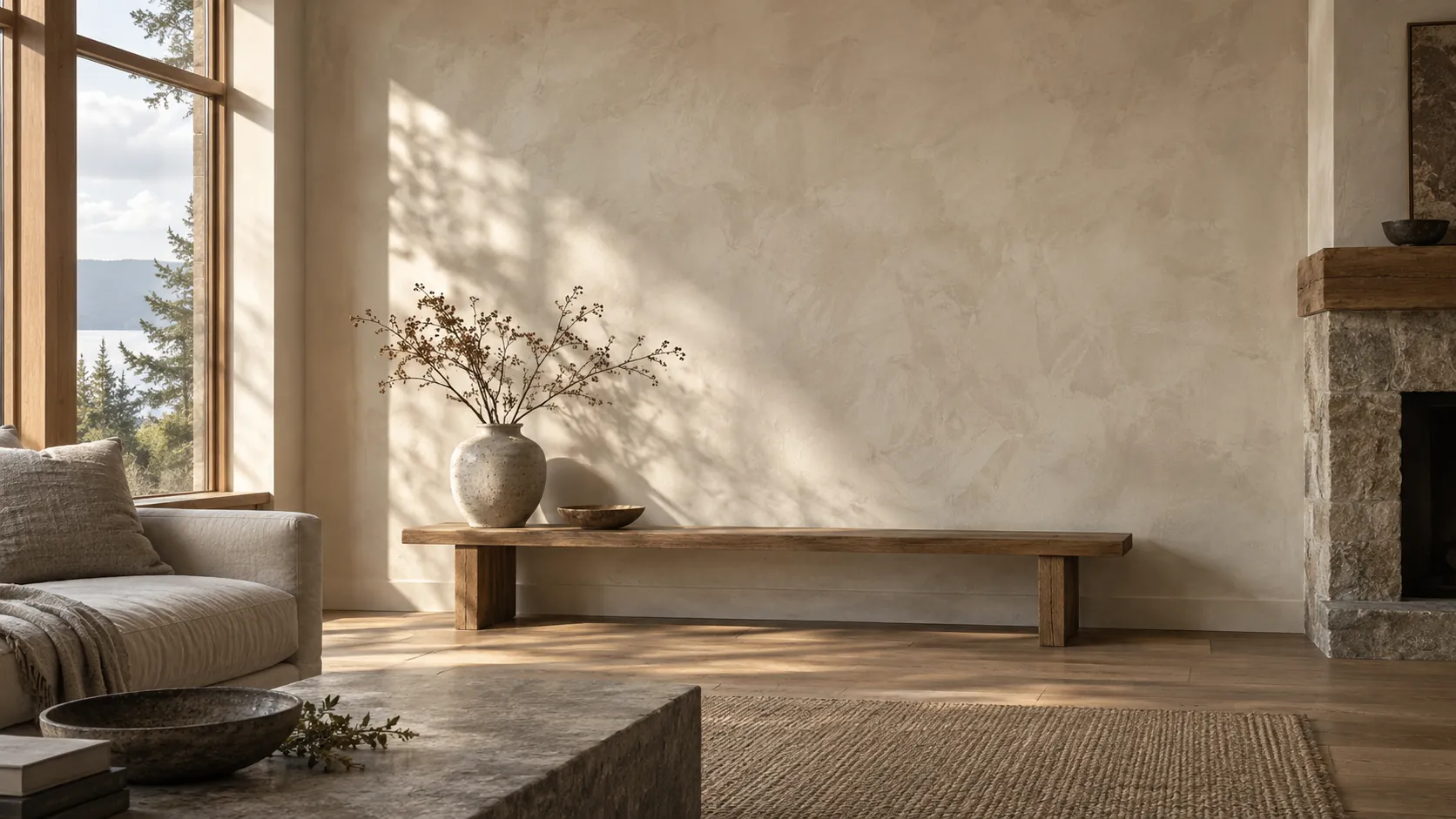
Living room wall in warm ivory limewash in low morning light

Heat, soot and the firebox

We coat only the parts of a fireplace you see from the room, which are the surround, the chimney breast and the hearth front. Inside the firebox the masonry stays bare, because flames char lime and blacken it. Soot and smoke marks are cleaned off beforehand, or they would ghost through a pale color.

Gas and wood-burning fireplaces both follow the maker’s instructions for use near the opening. Stone takes longer than brick to harden indoors, so the fireplace stays unlit until the product’s cure time has passed. If the color near the opening darkens over the years, a small recoat fixes it.

Beam mantels, hearths and color

Wood beam and shelf mantels are taped off or removed for the work, and most look better left as bare wood against the lime. If the hearth is used as a seat or a shelf, it gets a clear protective topcoat about ten to fourteen days after the limewash. Without one it stains.

Warm whites and soft greiges suit most great rooms. A board held against the floor, the sofa and the new wall color is the only reliable test, and it should be checked at night as well as in daylight.

Request a free limewash quote

Tell us whether the fireplace is stone, cast stone, brick or plaster, painted or not, how tall it is, and the address. We'll get back to you soon with an estimate or any questions we have. Estimates are free and there's no obligation.

Call (737) 777-8907

Call (737) 777-8907